Cleaning out a parent’s home is rarely just about clearing belongings. It can bring up family memories, difficult decisions, a move, a home sale, or a timeline that feels far too close. You do not need to finish everything in a weekend, and you do not need to make every decision at once.
A calmer approach is to break the process into small decisions, protect the things that matter, and get help with the physical work when the job becomes too large to manage alone.
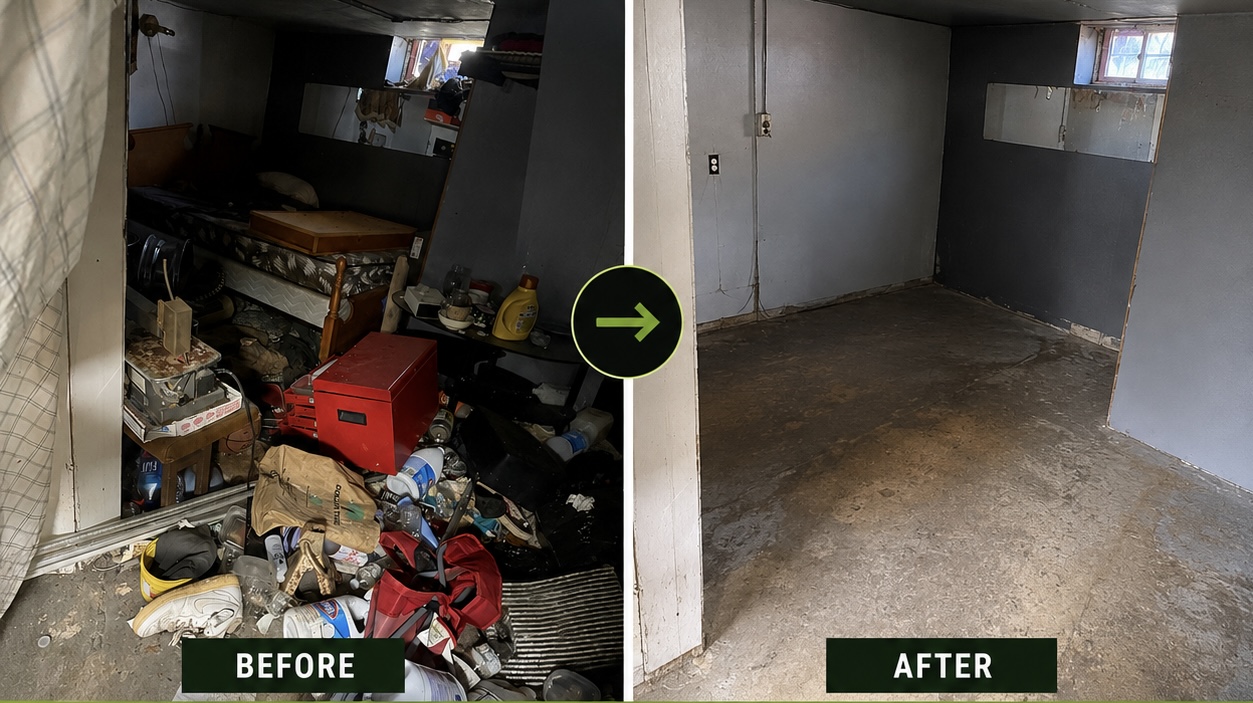
Start With a Plan, Not a Dumpster
Before you remove anything, take a step back and look at the home as a whole. What needs to happen next? Is the property being sold, cleaned, renovated, transitioned to a new owner, or simply made safer and easier to manage?
Write down the practical pieces first: who needs to be involved, what the timeline is, which rooms need attention, and what “done” looks like. That plan does not need to be perfect. It simply keeps the process from becoming a series of rushed decisions.
Starting with a plan also gives your family time to decide what matters before the home is cleared. The goal is not to empty the house as fast as possible. The goal is to move through it in a way that feels organized and manageable.
1. Make Sure the Right People Have Been Included
It is much easier to begin once everyone understands how decisions will be handled. Family members do not have to participate in every hour of sorting, but they should know the timeline and how to flag items that matter to them.
- Identify the people who need to be involved in decisions.
- Agree on who will make the final call when opinions differ.
- Set a realistic deadline for each major stage.
- Keep one simple shared list for questions, tasks, and items that need a family decision.
If there are estate or legal questions, get guidance from the appropriate professional before removing important items. This guide is about organizing the practical work of clearing a home, not making legal decisions.
2. Gather Important Papers and Irreplaceable Items First
Before you start clearing rooms, make one pass through the home for the things that should not accidentally be removed. You do not need to sort every keepsake immediately. The first goal is simply to create a safe place for anything important or personal.
That may include:
- Family photographs, albums, letters, and records
- Heirlooms and sentimental items
- Personal documents that need a family decision
- Keys, small valuables, and items with obvious personal importance
- Items that another family member has already asked to keep
Use a clearly labeled box or bin for these items and keep it separate from anything that may be removed later. That one step can make the rest of the process feel much less risky.
3. Sort One Small Area at a Time
Do not begin with the attic, basement, or the entire house. Start with something small enough that you can finish it without becoming exhausted or discouraged, such as one drawer, one closet, one shelf, or one corner of a room.
A simple sorting system keeps decisions moving:
- Keep: Items that are staying with the family or property.
- Family decision: Items that need a conversation before anyone decides.
- Donate or pass along: Items a family member or another person may want.
- Remove: Items that are approved to leave the property.
Label boxes or use painter’s tape so a pile does not become confusing later. Small completed areas build momentum and make it easier to see what the real cleanout scope will be.
4. Do Not Let “Maybe” Stop the Whole Process
Almost every home has a “maybe” category. It is normal to pause on some belongings, especially things tied to memories. The problem is when every item becomes a maybe and nothing can move forward.
Create one temporary family-decision area, clearly labeled bins, or a single designated room for those items. Give yourselves a reasonable date to revisit them. That lets the rest of the home keep moving without forcing a rushed answer in the moment.
It is okay for the process to be emotional. A simple system is not meant to rush anyone. It is meant to keep a difficult project from turning into an impossible one.
5. Make a Plan for the Big, Heavy, and Leftover Items
Once the family has pulled aside the items that matter, the remaining work is often physical. Furniture, appliances, packed storage spaces, garages, basements, attics, sheds, and full-house leftovers can be more than one person can safely or realistically handle.
That is often when families bring in a cleanout crew. A crew can handle the lifting and removal after you decide what is ready to go, leaving you free to focus on family decisions and the property’s next step.
If you need help with a larger job, learn more about estate cleanout help in Plymouth and the South Shore.
6. Get the Home Ready for Its Next Step
Clearing a parent’s home does not always mean the same thing for every family. Sometimes the goal is simply to make the home easier to manage. Other times, it is preparing for cleaning, repairs, photographs, a sale, renovation, or a transition to a new owner.
Once the unnecessary contents are gone, it becomes much easier to see the home clearly and decide what should happen next. For a wider project involving several rooms or storage areas, EcoHaul also offers full-property cleanout services.
A Simple Parent’s Home Cleanout Checklist
- Write down the property timeline and the next major deadline.
- Identify who needs to be part of decisions.
- Choose one shared list or group message for questions and tasks.
- Set aside a secure place for important papers and irreplaceable items.
- Start with one small, manageable area.
- Use clear categories: keep, family decision, donate or pass along, and remove.
- Create one temporary area for items that need more time.
- Make a list of large furniture, appliances, and storage areas that remain.
- Take photos of areas that will need cleanout help.
- Decide whether the home needs to be cleared in phases or all at once.
- Confirm the plan before removal begins.
- Make the final cleanout plan around the home’s next step.
When It Makes Sense to Ask for Help
There is no prize for trying to carry the whole job yourself. It may be time to ask for cleanout help when:
- The home has multiple rooms or storage areas to clear.
- There are heavy items, stairs, tight access, or a packed basement or attic.
- Family members live out of state or cannot be there for the physical work.
- A home sale, closing, move, or renovation deadline is approaching.
- The remaining work feels physically or emotionally unmanageable.
You can send photos of the property and tell us what stage you are in. We will help you understand the cleanout scope.
Frequently Asked Questions
Where do I start when cleaning out a parent’s house?
Start by making a simple plan, identifying who needs to be involved, and setting aside important papers and irreplaceable items. Then choose one small area to sort instead of trying to handle the entire house at once.
How long does it take to clean out a parent’s home?
Every home and family situation is different. The timeline depends on the size of the property, how much needs to be sorted, how many people are involved, and whether the work is done in stages. A written plan helps keep the process realistic.
What should I keep before an estate cleanout?
Before removal begins, set aside personal paperwork, photographs, heirlooms, family records, valuables, keys, and anything another family member has asked to review. When in doubt, put the item in the family-decision category rather than the removal pile.
What should I do when family members cannot agree on belongings?
Create a separate family-decision area for those items and set a date to revisit them. That allows the rest of the cleanout to continue without forcing an immediate decision about every item.
When should I hire a company to clean out the house?
Consider professional cleanout help once the family has decided what stays and the remaining work includes bulky furniture, appliances, multiple rooms, storage areas, heavy lifting, or a property deadline.
Helpful Next Steps
When the family decisions are complete and the project is ready to schedule, use the estate cleanout checklist for before the crew arrives. If the home will be listed, use our guide to prepare a house full of belongings for sale. To understand the size of the physical project, read what affects the cost of a whole-house cleanout. You can also return to the EcoHaul cleanout resources for related guidance.
When You Are Ready for the Physical Cleanout
EcoHaul helps families, homeowners, and property professionals clear larger homes, storage areas, furniture, and approved leftover contents throughout Plymouth and the South Shore.