A whole-house cleanout is not a flat, one-size-fits-all job. Two homes with the same number of bedrooms can require very different amounts of work depending on what is inside, how the property is laid out, and what needs to happen next.
The most useful way to think about cost is not “How many rooms are there?” It is “What will it take to clear this property safely, efficiently, and completely?” This guide explains the details a cleanout company looks at when preparing an estimate.
The biggest factors in a whole-house cleanout estimate are the amount of material, the number of areas being cleared, heavy items, stairs and access, storage spaces, and the timeline for the job. Photos are often the fastest way to get a clearer picture of the scope.
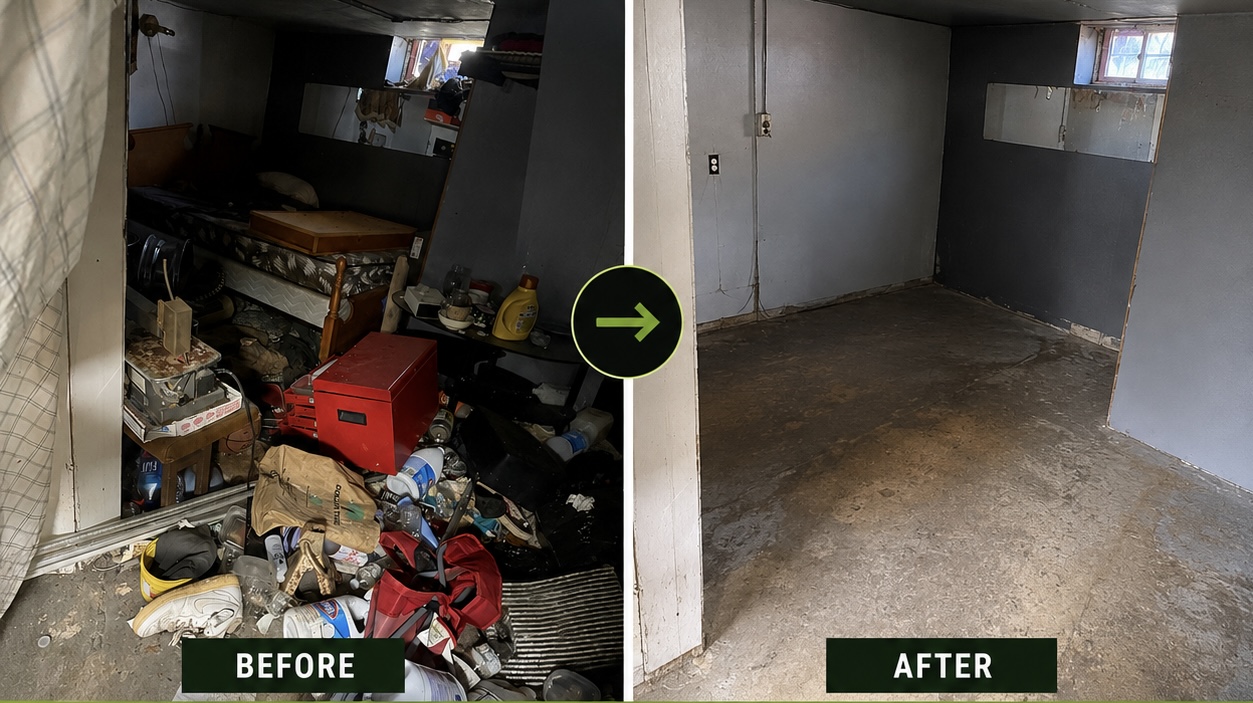
Need a clear estimate for a packed property?
Send EcoHaul a few photos of the rooms, storage areas, and large items, and we’ll help you understand the scope.
The Amount of Material Matters Most
The volume of furniture, boxes, household belongings, and approved leftover contents is a major part of any whole-house cleanout estimate. A lightly furnished home and a home with full rooms, packed closets, and storage areas are simply different projects.
Wide photos of each room are helpful because they show the overall volume, not just a few individual items. They also help identify areas that may need a closer on-site look.
1. Number of Rooms and Areas Included
A whole-house cleanout can include more than bedrooms and living spaces. Make a list of every area that is part of the job:
- Main living spaces and bedrooms
- Kitchens and dining areas
- Basements and attics
- Garages, sheds, and outdoor storage
- Closets, utility rooms, and other packed spaces
Including every area up front helps make the estimate accurate and avoids treating storage spaces as an afterthought.
2. Heavy or Difficult-to-Move Items
Large furniture, appliances, bulky items, and materials that are difficult to move affect the labor involved in a cleanout. The same is true of items located in a basement, attic, second floor, or other area that requires more carrying and coordination.
There is no need to move these items yourself before asking for an estimate. A clear description and photos help the crew understand what is there.
3. Stairs, Access, and Parking
How easily a crew can reach the property and move through it affects the scope of the work. Details worth mentioning include stairs, narrow hallways, long carrying distances, tight turns, limited parking, gates, and locked storage areas.
These details are not a reason to avoid reaching out. They are simply part of understanding the job properly before the cleanout begins.
4. Basements, Attics, Garages, and Sheds
Storage areas often hold the most material and can be the most time-consuming part of a whole-property cleanout. A basement full of boxes, a packed attic, or a garage that has not been cleared in years can change the overall scope significantly.
Take wide photos and include these spaces in the first conversation, even if the family is still deciding what stays.
5. The Type of Material Being Removed
Whole-house cleanouts can include a mix of furniture, appliances, boxes, household contents, and approved debris. The type of material affects how the project needs to be planned. If you are unsure whether something is part of the cleanout, send a photo before scheduling.
EcoHaul can review larger full-property cleanout services and help you understand the scope without forcing the project into a generic one-size-fits-all quote.
6. Timing and Whether the Work Happens in Phases
Some families need to sort through a home over time. Others have a listing, closing, move, renovation, or property turnover deadline. Both situations can be planned for, but the timing matters.
A phased project may make sense when family members need more time to decide what stays. A full cleanout may make more sense when the property needs to move quickly to its next step. Share the timeline early so it can be considered as part of the estimate.
Why Photos Help So Much
Photos help a cleanout company see the rooms, access, storage spaces, bulky items, and overall volume before anyone arrives. They also make it easier to decide whether photos are enough for the next step or whether an on-site estimate is better for the property.
Take one wide photo from the doorway of each room, plus photos of basements, attics, garages, sheds, large items, stairs, and access paths.
Details to Gather Before Requesting a Cleanout Estimate
- Property address and target timeline.
- Wide photos of every room included.
- Photos of basements, attics, garages, sheds, and outdoor areas.
- A list of especially large or heavy items.
- Information about stairs, parking, gates, and access.
- Which items or rooms are staying.
- Whether the work should happen all at once or in stages.
- What the property needs to be ready for next.
When It Makes Sense to Ask for Help
It may be time to request cleanout help when the property has multiple rooms, heavy furniture, storage areas, stairs, a sale or turnover deadline, or more leftover material than the family can realistically handle alone.
For an estate-related property, you can also learn more about estate cleanout help in Plymouth and the South Shore. Send photos and a short description of the home so EcoHaul can help you understand the cleanout scope.
Whole-House Cleanout Help Across Plymouth and the South Shore
EcoHaul helps families, homeowners, realtors, and property managers with larger cleanouts across Plymouth and the South Shore. Whether the job involves an estate, a home being prepared for sale, a rental turnover, or renovation prep, the estimate starts with understanding the real scope of the property.
Frequently Asked Questions
How is a whole-house cleanout estimate calculated?
An estimate is based on the amount and type of material, labor, access, storage areas, heavy items, and overall project scope.
Do I need to sort everything before asking for an estimate?
No. It is helpful to identify what stays, but photos and a general overview can be enough to begin the conversation.
Can a cleanout include a basement, attic, garage, and shed?
Yes. Include every area that needs attention so the full property scope can be reviewed.
What if the home needs to be cleared quickly?
Share the timeline when you request an estimate. The timing is one of the details that helps define the project.
Why might an on-site estimate be needed?
Larger, heavily filled, or complicated properties may need an on-site look to accurately assess the volume, access, and work involved.
Get a Clearer Picture of the Cleanout Scope
Send photos of the property, storage areas, and large items. EcoHaul will help you understand what the project involves.